
Choosing between wood blinds and wood shutters can be tough. Both are classic options that offer timeless appeal and functionality, but how do they compare in 2026? Let’s break down the key factors to help you decide which window treatment best suits your needs.
Wood Blinds vs. Wood Shutters: Key Differences

Wood Blinds
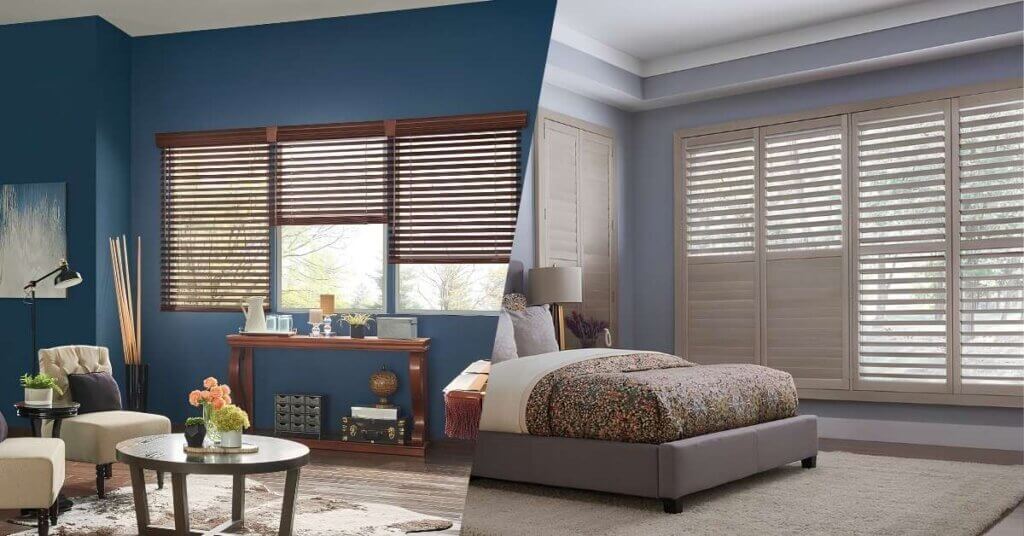
Wood blinds are a flexible and cost-effective choice. Made from high-quality hardwood, they feature adjustable slats (louvers) that give you control over light and privacy. They come in a range of finishes, including organic wood and custom-painted options, offering a sleek, minimalist look.
Wood Shutters
Wood shutters, especially plantation shutters, function more like a permanent architectural window feature. They feature wider louvers and sturdy frames, which can be custom-made to fit your windows. Shutters offer greater insulation and privacy, making them an excellent investment for any home.

Aesthetic Appeal: Sleek vs. Timeless
Both options bring natural beauty to your home, but with different vibes:
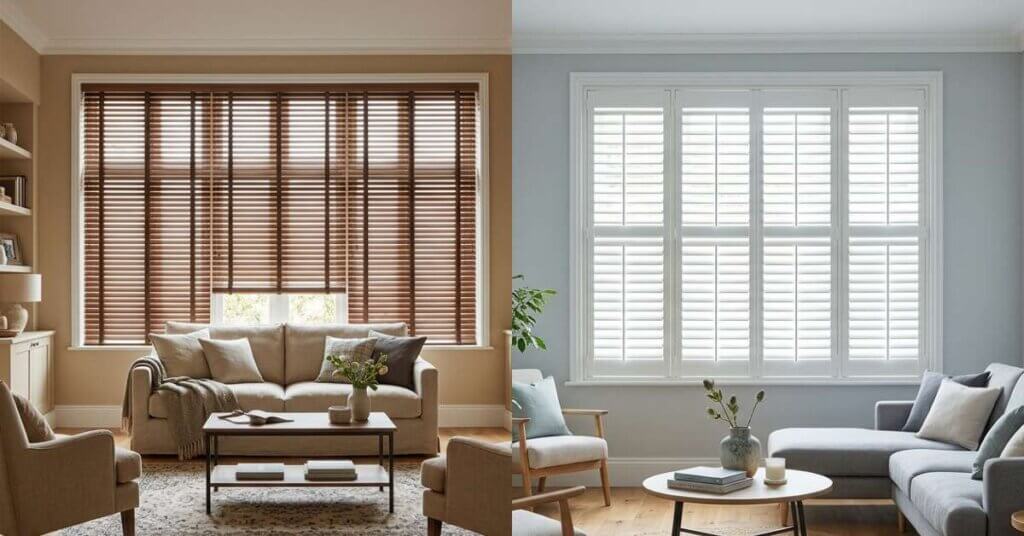
- Wood Blinds: Ideal for a modern, biophilic design, wood blinds offer a sleek, minimalist look that fits seamlessly into contemporary and organic-style interiors.
- Wood Shutters: Shutters provide a timeless, architectural presence. The wide louvers and custom frames create a refined, classic style that works well in both traditional and modern settings.
Want to give your living room a warmer, more refined look? Learn how wood shutters can redefine your space in this guide.

Functionality: Light Control & Privacy
Both wood blinds and shutters excel in controlling light and privacy:
- Wood Blinds: With adjustable slats, they offer precise control over light and can be easily adjusted for full or partial privacy.
- Wood Shutters: With their wide louvers, shutters provide superior light control and privacy, making them ideal for rooms that require both insulation and seclusion.

Energy Efficiency & Insulation
Wood offers natural insulation, but the structure matters:
- Wood Blinds: The slatted design provides some insulation but may not be as efficient as shutters.
- Wood Shutters: Their solid construction provides excellent insulation, making them a better option for energy efficiency, especially in homes with extreme weather conditions.

Durability & Maintenance
- Wood Blinds: Though durable, wood blinds require more maintenance, including occasional cleaning and touch-ups to keep them looking their best.
- Wood Shutters: Easy to maintain, they require only a wipe-down to keep them clean. Their sturdy build also ensures they last longer, even in humid environments.

Cost and Investment
Shutters tend to be more expensive upfront due to their custom nature and long-term benefits. However, the investment often pays off in terms of durability, energy efficiency, and enhanced home value. Wood blinds are generally more budget-friendly, providing a stylish solution with flexible options.
Here’s a side-by-side breakdown to help you decide:
Feature | Wood Blinds | Wood Shutters |
Aesthetic | Sleek, minimalist design | Timeless, architectural presence |
Light Control | Adjustable slats for precise control | Wide louvers for uniform control |
Privacy | Good, but may have slight gaps in slats | Excellent due to solid structure |
Energy Efficiency | Moderate insulation | Superior insulation and temperature control |
Moisture Resistance | May warp in humid environments | Composite or faux wood options resist moisture |
Customization | Available in a variety of stains/paints | Custom-made for a tailored fit |
Maintenance | Requires occasional cleaning and touch-ups | Easy to clean with minimal upkeep |
Cost | More budget-friendly | Higher upfront cost, but a long-term investment |
Frequently Asked Questions About Wood Blinds Vs. Wood Shutters
Can I customize the color and finish of both wood blinds and shutters?
Yes, both wood blinds and wood shutters can be customized. Wood blinds offer a range of organic wood finishes or custom paint options, while wood shutters, especially plantation styles, can be tailored to match your décor.
How do wood blinds and shutters handle humidity in bathrooms?
Wood blinds can absorb moisture, which can lead to warping. For better moisture resistance, composite or fiber wood shutters are ideal, as they’re designed to withstand steam and high humidity in spaces like bathrooms.
Are wood blinds or shutters better for layering with other treatments?
Wood blinds are perfect for layering with drapes or curtains due to their slim, minimalist profile. Wood shutters, while offering great privacy and insulation, may be more challenging to layer due to their bulkier frames.
Do wood shutters add value to my home?
Yes, wood shutters, especially custom-made plantation shutters, add value through their timeless design, energy efficiency, and durability, making them an attractive feature for future buyers.
What’s the environmental impact of wood blinds versus shutters?
Wood blinds, made from sustainably sourced hardwood, are eco-friendly. Composite or organic wood shutters also offer sustainability, as their durability reduces the need for replacements, contributing to a lower environmental impact.
Choosing the Best Option for Your Home
Ready to find the perfect window treatment for your home? Our experts at MITS St. Louis will help you explore your options and find the perfect solution. For personalized guidance, schedule an in-home consultation.
Choosing the Best Option for Your Home
Both wood blinds and wood shutters offer unique benefits, from style and light control to privacy and energy efficiency. Your decision ultimately depends on your priorities—whether you value sleek, adaptable designs or a timeless, investment-worthy feature. Understanding the differences ensures you select a window treatment that not only enhances your home’s aesthetic but also meets your practical needs for years to come.
Ready to find the perfect window treatment for your home? Our experts at MITS St. Louis will help you explore your options and find the perfect solution. For personalized guidance, schedule an in-home consultation.