
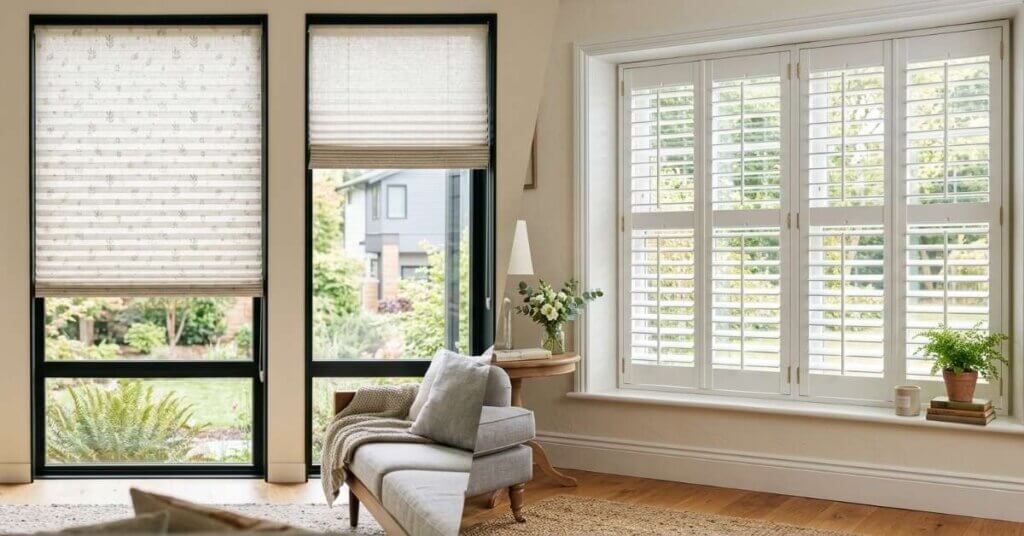
Choosing between pleated shades and shutters can shape the look, feel, and functionality of your home. Both treatments offer unique benefits for controlling light, enhancing privacy, and complementing interior design. This guide explores options, styles, and solutions to help you decide which works best for your windows and decor.

Understanding Pleated Shades and Shutters
Pleated shades and shutters are popular window coverings, but they serve different design needs and home functions. Knowing their characteristics can guide your decision.

Pleated Shades
- Material & Fabric Options: Made from crisp, accordion-style fabrics, pleated shades are often available in polyester, blackout, and light-filtering options.
- Design Versatility: Ideal for minimalist, contemporary, or modern interiors. The fabric folds neatly when raised, maintaining a clean, streamlined look.
- Light Control & Privacy: Adjust height to manage sunlight and maintain privacy. Some fabrics soften glare without fully darkening a room.
- Custom Styling: Available in various colors, patterns, and textures to complement your room decor.
Shutters
- Material & Structure: Often crafted from solid wood or composite materials, shutters offer a durable, architectural element to windows.
- Design Styles: Fit traditional, classic, and modern homes. Plantation shutters with wide louvers are a signature choice for classic aesthetics.
- Light & Privacy Management: Louvers tilt to control sunlight while offering consistent privacy. Shutters also add insulation, reducing energy costs.
- Long-Term Value: Function as permanent window features that enhance the home’s interior styling and resale appeal.

Explore the benefits of cordless pleated shades and see why they’re a popular choice for modern, family-friendly homes. Read here!
Pleated Shades vs. Shutters At A Glance
Feature | Pleated Shades | Shutters |
Interior Style | Minimalist, modern, contemporary | Classic, traditional, modern |
Material | Fabric (polyester, blackout) | Wood, composite |
Light Control | Adjustable by height | Adjustable via louver tilt |
Privacy | Medium; soft light diffusion | High, precise control |
Maintenance | Easy dusting, occasional washing | Wipe clean, durable, long-term |
Installation | Custom fit for each window | Built-in or frame-mounted; custom sizing |
Aesthetic Flexibility | Patterns, colors, textures | Stains, paints, finishes, and architectural presence |
This comparison shows how your choice depends on both practical needs and the room’s design aesthetic.
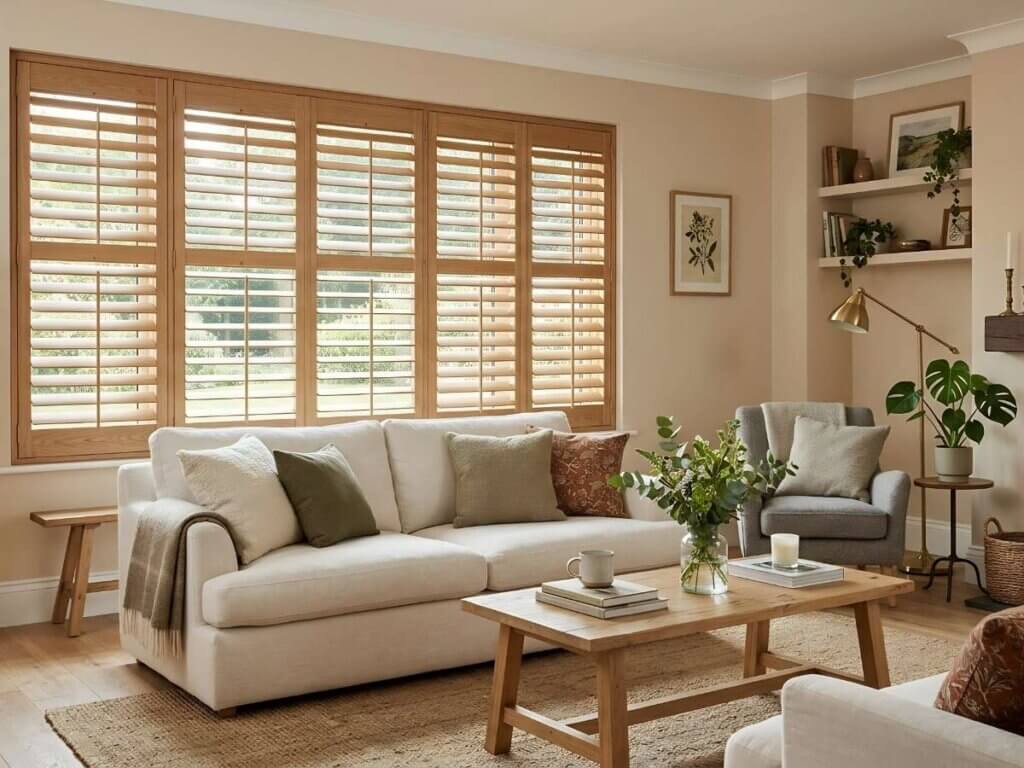
Styling Tips and Interior Design Ideas
- Living Rooms: Shutters can anchor a classic or transitional room, while pleated shades add soft texture for modern or minimalist interiors.
- Bedrooms: Blackout pleated shades enhance sleep quality without heavy visual presence; shutters provide layered style and permanent elegance.
- Home Offices: Light-filtering pleated shades reduce glare while maintaining a clean, professional look; shutters can create a cohesive, timeless atmosphere.
- Color & Pattern Coordination: Pleated shades allow more playful patterns, while shutters emphasize natural wood tones or painted finishes for sophisticated styling.
Considering wood shutters for your home? Discover how they can add warmth, character, and lasting value to any living space in this guide.
Choosing the Right Solution for Your Home
- Assess Room Function: Bedrooms or media rooms may benefit from blackout pleated shades; living spaces and kitchens might suit shutters for longevity and design impact.
- Consider Decor Style: Minimalist and contemporary interiors pair beautifully with pleated shades. Traditional or classic rooms gain depth from wood shutters.
- Budget & Investment: Pleated shades are often more cost-effective and easier to change. Shutters provide long-term value and durability.
- Customization: Both treatments can be custom-made to fit unusual window shapes, colors, and materials, ensuring a seamless integration with your home.

Frequently Asked Questions About Pleated Shades vs. Shutters
Can I mix pleated shades and shutters in one home?
Which is better for sunlight control?
How do these treatments impact room ambiance?
Are there energy efficiency benefits?
Can pleated shades be motorized?
Choosing the Best Option for Your Home
Ready to find the perfect window treatment for your home? Our experts at MITS St. Louis will help you explore your options and find the perfect solution. For personalized guidance, schedule an in-home consultation.
Your Ideal Window Coverings Await
Choosing between pleated shades vs. shutters ultimately depends on your interior design style, light management needs, and long-term investment goals. Pleated shades offer flexible, fabric-based solutions for modern, minimalist, and contemporary spaces, while shutters bring classic charm, durability, and architectural presence. Both options can be customized to your windows, ensuring your home reflects your personal style while providing functional benefits.
Schedule a free in-home consultation with MITS St. Louis to explore custom window treatments designed to fit your home’s décor, style, and needs. Our team will guide you through options, materials, and installation, delivering results that elevate every room and make it easier than ever to create a home you love.