
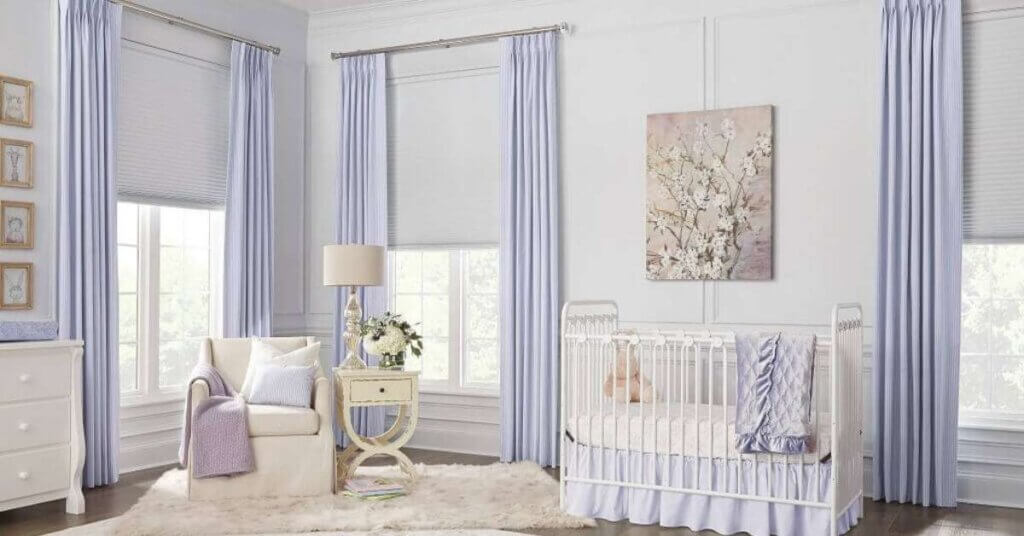
Your bedroom is your sanctuary, a place to unwind and recharge. The right window treatments not only enhance its aesthetics but also serve practical purposes, such as light control, privacy, and energy efficiency. Let’s explore the best options for bedroom window treatments to help you create a cozy, functional, and stylish retreat.
Why Window Treatments Matter in the Bedroom
Window treatments do more than decorate a room—they shape the way light, temperature, and privacy interact with your space. Bedrooms, in particular, benefit from thoughtful choices, as the right treatments can:
- Promote better sleep by blocking unwanted light.
- Enhance privacy for a more intimate setting.
- Improve energy efficiency, keeping your space cool in the summer and warm in the winter.
- Set the mood, whether it’s serene, romantic, or modern chic.
Top Window Treatments for Bedrooms
1. Blackout Drapes
For ultimate control over natural light, blackout drapes are a popular choice. These heavy, light-blocking fabrics ensure a restful sleep environment by keeping out nearly 100% of light.
Why They’re Great:
- Provide complete darkness for better sleep, even during daylight hours.
- Reduce noise for a quieter, more peaceful ambiance.
- Available in a variety of colors and patterns to match your bedroom decor.
Best For: Light sleepers, shift workers, or families with young children.
2. Cellular Shades
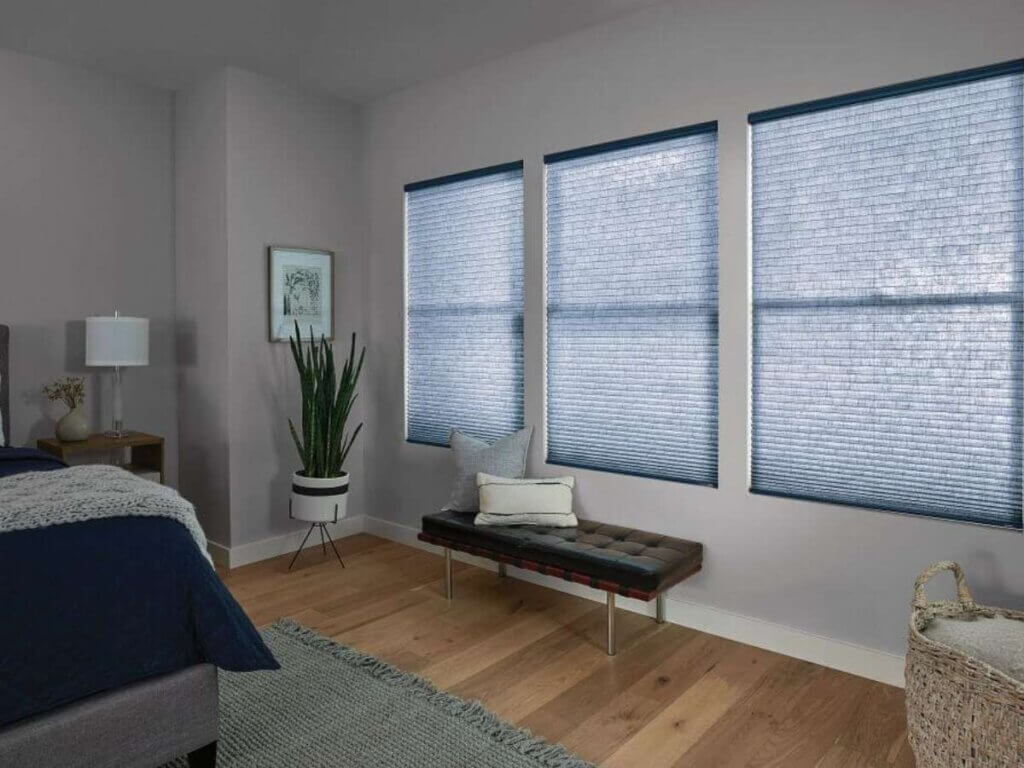
Cellular shades, also known as honeycomb shades, are a versatile and energy-efficient option. Their unique design traps air, helping to regulate the temperature in your bedroom.
Why They’re Great:
- Energy-saving insulation keeps your bedroom cozy year-round.
- Available in light-filtering or blackout options.
- Sleek, minimalist look that fits any style.
Best For: Eco-conscious homeowners who value both form and function.
3. Layered Window Treatments
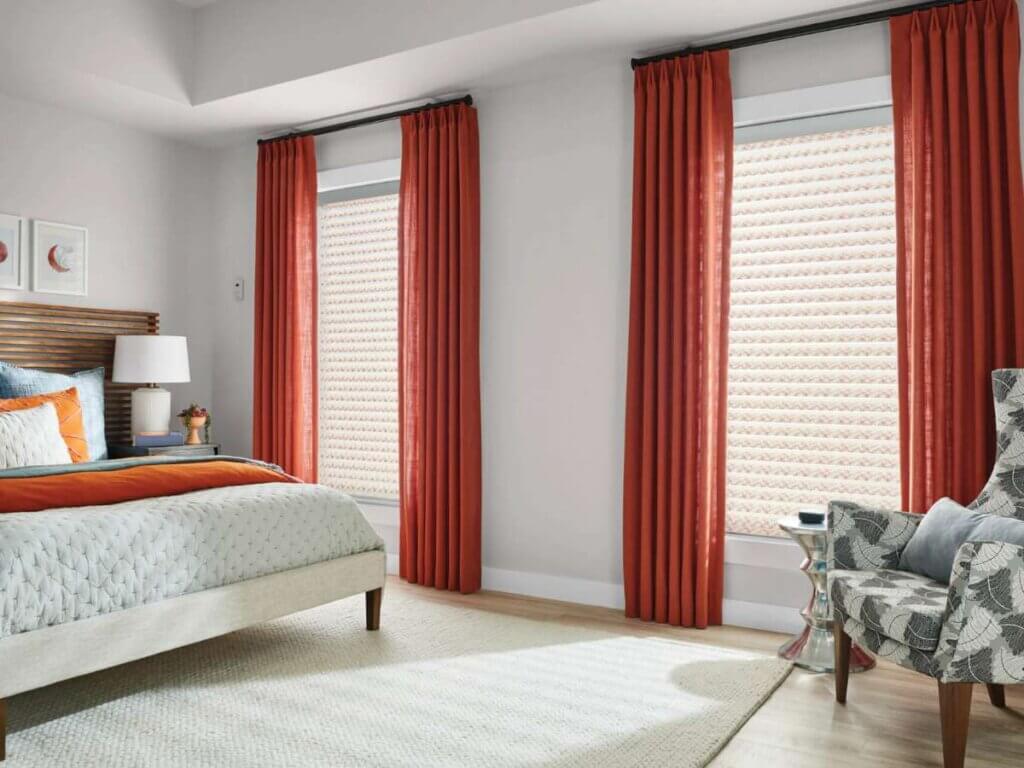
For those who want flexibility, layered window treatments combine different materials, such as drapes and shades. This approach allows for dynamic light control and added depth to your design.
Why They’re Great:
- Combine sheer curtains for daytime and blackout drapes for nighttime.
- Add texture and dimension to your decor.
- Works for both modern and traditional styles.
Best For: Those who enjoy variety and multi-functional spaces.
4. Roman Shades

Roman shades offer a timeless look with soft fabric folds that add sophistication to your bedroom. They are available in a wide range of fabrics, making them highly customizable.
Why They’re Great:
- Clean, classic appearance that suits both modern and traditional designs.
- Provides privacy while allowing some natural light when needed.
- Available with cordless and motorized options for added convenience.
Best For: Elegant spaces that blend comfort with style.
5. Sheer Drapes
If you prefer a light and airy feel, sheer drapes diffuse sunlight beautifully while maintaining a level of privacy. They are perfect for creating a tranquil bedroom atmosphere.
Why They’re Great:
- Gently filters natural light, giving your bedroom a dreamy ambiance.
- Layer with blackout drapes or heavier curtains for added versatility.
- Come in a variety of textures and colors to complement any design.
Best For: Bedrooms with large windows or those overlooking private outdoor spaces.
Choosing the Perfect Window Treatments for Your Bedroom
When selecting window treatments, it’s essential to consider both style and function. Here are some tips to help you make the best choice:
Prioritize Privacy and Light Control
Bedrooms often require treatments that offer full privacy and adjustable light levels.
Match Your Decor Style
Choose materials, colors, and patterns that complement your bedroom’s overall design. For a minimalist space, go with cellular shades or sheer drapes. For something more dramatic, opt for layered treatments.
Consider Energy Efficiency
In rooms exposed to direct sunlight or cold drafts, energy-efficient options like cellular shades can help maintain a comfortable temperature.
Think About Convenience
Motorized or cordless window treatments add convenience, especially for large or hard-to-reach windows. They’re also safer for households with young children or pets.
Frequently Asked Questions About Bedroom Window Treatments
What are the best window treatments for small bedrooms?
Roller shades or sheer drapes are great for small bedrooms as they maintain clean lines and let in more natural light, making the room feel more spacious.
How can window treatments improve sleep quality?
Blackout drapes or shades block external light sources, helping to create a dark, serene environment conducive to better sleep.
Are there window treatments that improve bedroom energy efficiency?
Yes, cellular shades are highly energy-efficient, as they trap air and regulate the room’s temperature, reducing the need for additional heating or cooling.
Create Your Dream Bedroom with the Right Window Treatments
Your bedroom deserves the perfect balance of comfort, style, and functionality. From blackout drapes that ensure restful sleep to Roman shades that add an elegant touch, the right window treatments can transform your space.
Ready to find the ideal window treatments for your bedroom? Contact Made In The Shade St. Louis today for a free consultation and explore tailored solutions to enhance your sleep sanctuary!