
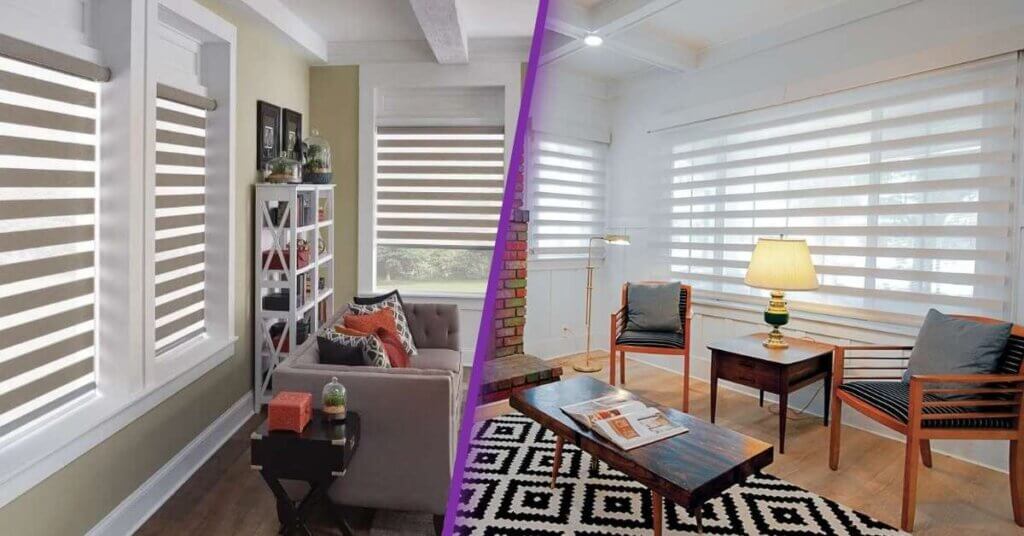
Choosing between layered shades vs. sheer shades comes down to how you want your space to feel and function. Layered shades offer flexible light control and stronger privacy control, while sheer shades focus on soft light diffusion and an airy, elegant look. This shade comparison breaks down design, performance, and practicality so you can confidently select the right window treatments for your home.
Understanding the Basics
Before comparing features, it helps to understand how each option works.
What Are Layered Shades?
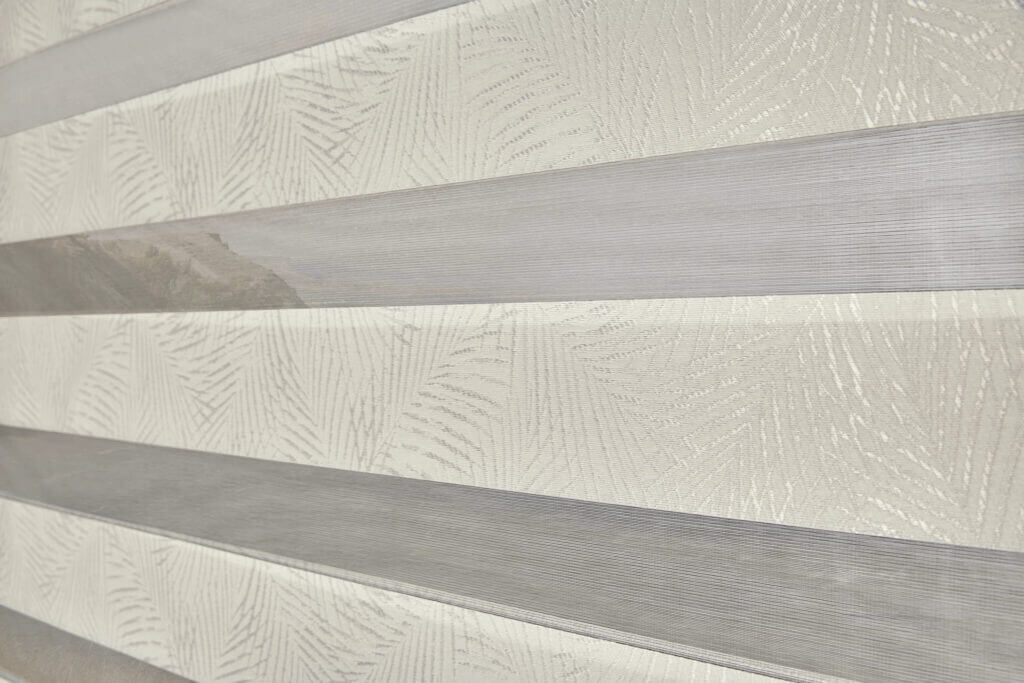
Layered shades—sometimes called dual or zebra-style shades—feature alternating bands of solid and sheer fabric. These horizontal fabric vanes slide past one another to adjust light control and privacy.
With a simple adjustment, you can:
- Align sheer sections for light filtering
- Overlap solid bands for room darkening
- Raise the entire shade for a clear view
They’re a modern window fashion choice known for crisp lines and contemporary window aesthetics.
What Are Sheer Shades?

Sheer shades combine sheer fabric panels with suspended fabric vanes between them. When open, the sheer fabric gently diffuses sunlight. When closed, the vanes tilt to increase privacy control and reduce glare.
These soft shades are often chosen for:
- Elegant windows in living rooms
- Spaces needing subtle light diffusion
- Homes focused on refined interior design
They offer the polished look of decorative shades with the functionality of window shades.
Layered Shades vs. Sheer Shades: A Direct Shade Comparison
Below is a practical breakdown to help clarify the differences.
Feature | Layered Shades | Sheer Shades |
Light Control | Adjustable bands for flexible light filtering to room darkening | Tilting fabric vanes allow gradual light control |
Privacy Control | Strong privacy when bands align in closed position | Moderate to strong depending on vane tilt |
Light Diffusion | Balanced, more structured | Soft, natural light diffusion |
UV Protection | Excellent when solid bands overlap | Very good due to sheer fabric layers |
Window Insulation | Moderate | Moderate |
Style Impact | Modern, clean, bold | Soft, airy, refined |
Light Control & Privacy: What Matters Most?
For many homeowners, the biggest concern is managing glare, street visibility, and changing daylight throughout the day.
When Layered Shades Make More Sense
Choose layered shades if you:
- Want flexible transitions between open and closed
- Need stronger room darkening in bedrooms
- Prefer a bold, defined look in your window coverings
Their structured design makes them highly effective for homes facing direct sunlight.
When Sheer Shades Shine
Choose sheer shades if you:
- Want filtered daylight without harsh glare
- Prefer softer window styles
- Value elegant windows with a designer touch
They’re especially beautiful in spaces where natural light is part of the design vision.
Design & Home Decor Impact
Both options elevate home decor—but in different ways.
Layered Shades in Interior Design
Layered shades create visual structure. Their horizontal bands complement:
- Contemporary interiors
- Minimalist home decor
- Clean-lined window hardware
They pair well with modern window aesthetics and streamlined furnishings.
Sheer Shades and Window Fashion
Sheer shades lean toward softer, transitional or traditional spaces. The translucent shades create depth without overwhelming the room.
They work beautifully with:
- Decorative trim
- Statement furniture
- Layered interior design elements
If you want your window treatments to blend gracefully rather than stand out, sheer fabric may be the better fit.
Practical Considerations
When selecting window coverings, performance matters just as much as appearance.
Maintenance
Both options are relatively easy to maintain:
- Regular dusting or light vacuuming keeps fabric vanes clean
- Spot cleaning addresses minor stains
- Professional cleaning can extend longevity
UV Protection & Window Insulation
Both layered shades and sheer shades offer UV protection, helping reduce fading on flooring and furniture. While neither replaces heavy insulated treatments, they provide moderate window insulation that contributes to everyday comfort.
Key Takeaways
- Layered shades provide stronger room darkening and defined privacy control.
- Sheer shades deliver softer light diffusion and a more elegant window aesthetic.
- Both options offer UV protection and moderate window insulation.
- Your decision should reflect your lighting needs, window styles, and interior design goals.
- Seeing fabric samples in person makes a noticeable difference in the final selection.
Which One Is Right For Your Home?
The decision between layered shades vs. sheer shades isn’t about which is better—it’s about which aligns with your lifestyle, lighting needs, and interior design goals. Layered shades provide bold control and flexibility, while sheer shades create softness and sophistication. Both are high-performing window treatments that enhance privacy, light control, and overall window aesthetics.
If you’re weighing your options and want tailored guidance for your home, MITS STL is ready to help. Schedule a consultation to compare samples side by side and choose the window shades that fit your space with confidence.